Before the Boardroom: Jason Ferguson Revisits the Playing Career That Shaped a Chairman

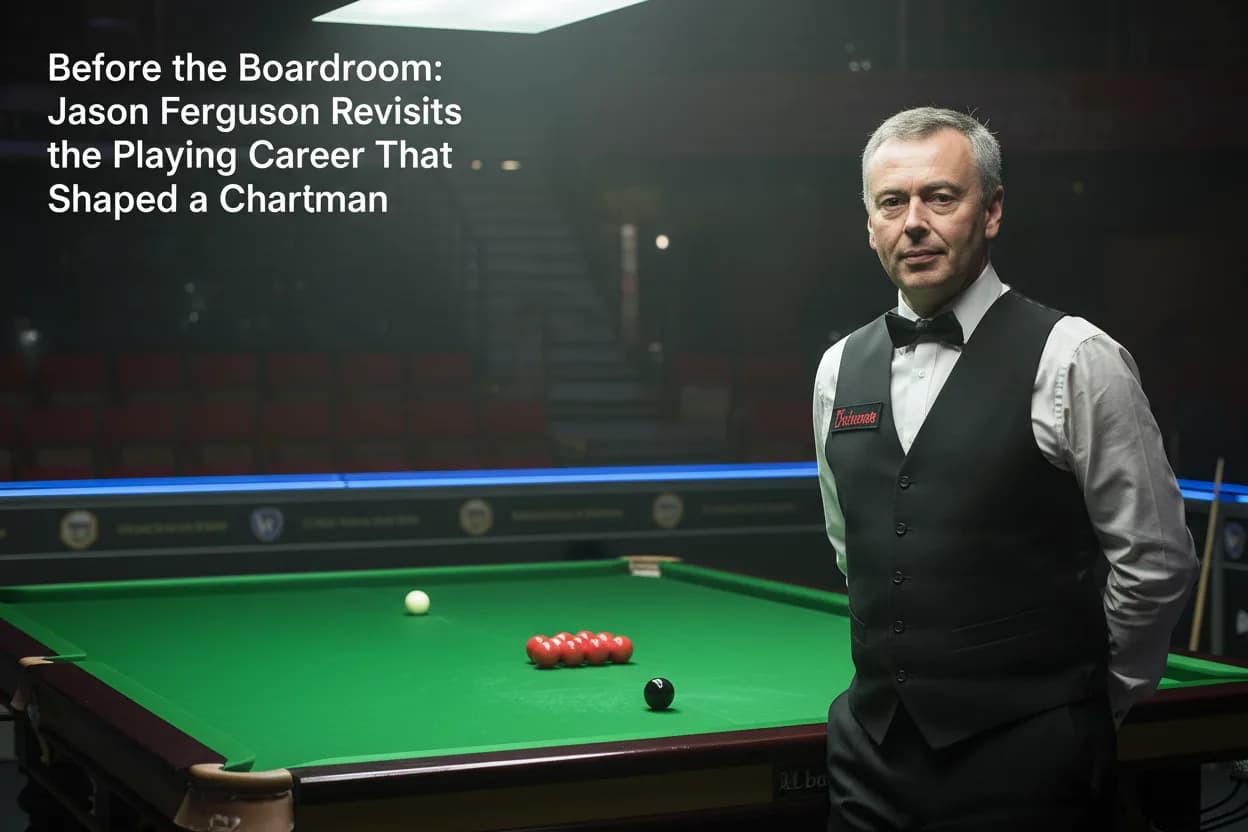
The Player Behind the Politics
For most snooker fans today, the name Jason Ferguson conjures images of press conferences, governance debates, and the ongoing campaign to bring snooker to the Olympic stage. But long before Ferguson took his seat at the head of the WPBSA, he was doing exactly what every ambitious young player dreams of — chalking up his cue, steadying his nerves, and walking out under the lights at the Crucible Theatre. This week's episode of the WPBSA Snooker Podcast peels back the administrative veneer to reveal the competitor underneath.
A Career Forged in the 1990s
Host Michael McMullan sits down with Ferguson for a wide-ranging conversation that traces his journey from a lifelong passion for the game through to the highs and hard lessons of life on the professional Tour. Ferguson's playing career stretched across the 1990s and into the 2000s — a particularly gruelling era for the sport's mid-tier professionals, when the ranking system was unforgiving and the prize money thin outside the top sixteen. To have navigated that landscape well enough to reach a career-high world ranking of 28 is no small feat, and it's a figure that deserves more recognition than it typically receives given how his later career has overshadowed it.
Perhaps most evocatively, Ferguson qualified for the World Championship at the Crucible on three separate occasions — something that resonates with anyone who understands just how brutally competitive the qualifying rounds have always been. Sheffield's famous theatre has a way of becoming the defining measure of a professional career, and to reach it three times speaks to a player of genuine quality and resilience. In the podcast, Ferguson reflects on those appearances with the kind of candour you only get from someone who has had years to process what those moments meant.
The Crucible — Three Times
There is something almost poetic about a man who once competed for the sport's greatest prize now spending his working life trying to secure snooker's place on a far larger stage. The Crucible holds its own unique mythology — the hush before a crucial shot, the murmur that ripples through the crowd when something extraordinary happens, the way seventeen days of snooker can feel both relentless and over in a heartbeat. Ferguson has experienced that world as a player, and it is difficult not to hear a thread of that experience running through his administrative ambitions.
For players of Ferguson's generation, simply qualifying for the Crucible required navigating a qualifying format that could chew up a career's worth of confidence in a single bad week. The fact that he managed it three times — whilst building and maintaining a ranking inside the world's top thirty — tells you something about his mental fortitude as well as his technical ability.
From Cue to Chairman
The podcast doesn't shy away from the transition either. Ferguson discusses how his playing career eventually gave way to his growing involvement in the governance of the sport — a shift that will be familiar in its broad strokes to anyone who has followed snooker's sometimes turbulent administrative history. What comes through clearly is that his time as a professional player didn't just end and leave him behind; it informed everything that followed. Understanding what it feels like to travel the world as a Tour professional, to depend on ranking points for your livelihood, gives any administrator a context that pure business backgrounds simply cannot replicate.
That perspective also underpins one of Ferguson's most prominent causes: the push to see snooker included in the Olympic Games. It's an ambition that has drawn both passionate support and scepticism in equal measure from within the snooker community. Whether you believe Olympic inclusion would broaden the sport's global appeal or dilute its identity, there is no question that Ferguson's advocacy comes from a place of genuine belief — the belief of someone who has devoted their life to snooker in every possible form.
Listen Now
The full episode is available now on Spotify, Apple Podcasts, and YouTube — and it's well worth your time, whether you remember Ferguson's playing days or only know him as the face of the WPBSA. McMullan does what the best interviewers do: he lets his subject breathe, and the result is a portrait of a man whose relationship with snooker has simply changed shape over the decades rather than ever fading away. Sometimes the most revealing conversations about a sport aren't about the last frame played, but the first one that made someone fall in love with the green baize all over again.
