Beyond the Maximum: Ronnie O'Sullivan Rewrites History With a Staggering 153

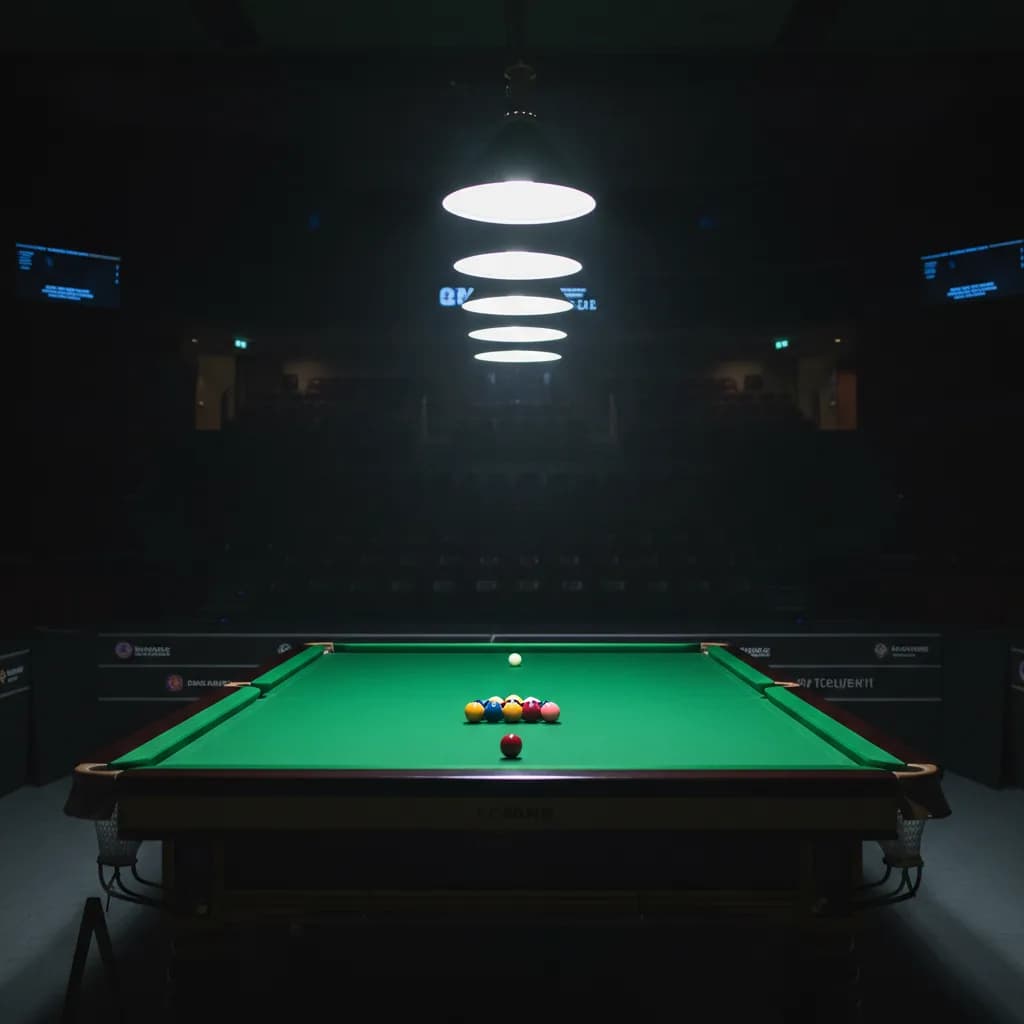
A free ball, a decision, and a moment that will never be forgotten
There are moments in sport that stop you cold. Not just the roar of a crowd or the flash of a scoreboard, but something quieter — the dawning realisation that you are watching something that has never happened before, and may never happen again quite like this. At the World Open in Yushan, Ronnie O'Sullivan produced one of those moments, compiling a break of 153 to set a new record for the highest ever score in professional snooker. He was fifty years old. He made it look easy.
It began, as so many O'Sullivan masterclasses do, with a touch of cunning. In the opening frame of his quarter-final against Welshman Ryan Day, O'Sullivan tucked his opponent into a snooker. Day couldn't escape cleanly, and the referee awarded O'Sullivan a free ball. He chose the green, potting it as an extra red before following it with a black — and from that point, the sport's record books were in genuine danger. Fifteen reds followed, thirteen of them accompanied by blacks and two by pinks, before O'Sullivan swept through the final six colours without a flicker of hesitation. The counter ticked past 147 — the maximum break, snooker's holy grail — and kept climbing. When it settled on 153, the sport had a new landmark.
What exactly happened — and what it means
To understand the magnitude of what O'Sullivan achieved, it helps to know a little about the mathematics of snooker's scoring. A standard maximum break of 147 is earned by potting all 15 reds, each followed by the black, then clearing the six colours in sequence. It is the sport's most celebrated single-frame achievement, and O'Sullivan has made more of them than anyone. But a free ball — awarded when a player is snookered after a foul — opens up a rarer possibility. The recipient can nominate any ball as an extra red, and if they pot it followed by the black, then complete a perfect clearance of all 15 reds with blacks and the six colours, they can reach a theoretical maximum of 155.
O'Sullivan reached 153, falling just two points short of that theoretical ceiling. The previous professional record was a 148 compiled by Scotland's Jamie Burnett during the UK Championship qualifiers back in 2004 — itself a break that had stood untouched for more than two decades. O'Sullivan didn't just nudge that record; he sailed past it. And in doing so, he completed a 5-0 demolition of Day that barely seemed to register as a separate achievement by the end of the session.
Speaking in a video posted on X afterwards, O'Sullivan was characteristically warm and self-deprecating. "Just want to say a big shoutout to all the people who have been messaging me, congratulating me on the 153," he said. "It was a pretty cool moment, really happy to do it. Thank you to everyone out there that has supported me." He also admitted that the record had crossed his mind mid-frame. "I could have tried to get the other black but I thought, 'I don't think anyone's made a break above 147 on TV', so I thought I'd be the first. I've been the first of many things so I thought I might as well get that one too. I feel blessed to be able to achieve these things."
A genius label that actually fits
The word genius gets worn thin in sport. It gets draped over anyone who scores a hat-trick or hits a century, until it means almost nothing. But Neil Robertson, himself a former world champion and one of the finest players of his generation, deployed it on BBC Radio 5 Live without the slightest hesitation when asked to react. "He's an absolute genius, he really is," Robertson said. "It gets branded a lot in sport and it annoys me when it is in other sports. But what he's been able to do — there's no other British sportsman who could do this. We are very blessed to have him in our sport."
It is worth sitting with that for a moment. Robertson is not a man given to hyperbole. He has shared venues, practice rooms and ranking lists with O'Sullivan for the better part of twenty years. When he reaches for a word like genius, he means it as a precise description rather than a flourish.
O'Sullivan himself hinted at what keeps the fire burning at fifty. "I've never made anything more than a 147," he said. "For me it's the excitement, the buzz. If the excitement and the buzz is there I can do great things. I need to think there's a good reward at the end of it. Then you get focused, it sharpens the mind up a bit." There is something almost poignant in hearing a seven-time world champion — a man who has won everything the sport has to offer, multiple times over — talk about needing that spark of excitement to perform. And yet it also explains everything. The 153 wasn't just a record. It was Ronnie O'Sullivan, still hungry, still finding new rooms in a house he has lived in his whole life.
