WPBSA Bans Trans Athletes from Women's Snooker in Landmark Policy Overhaul

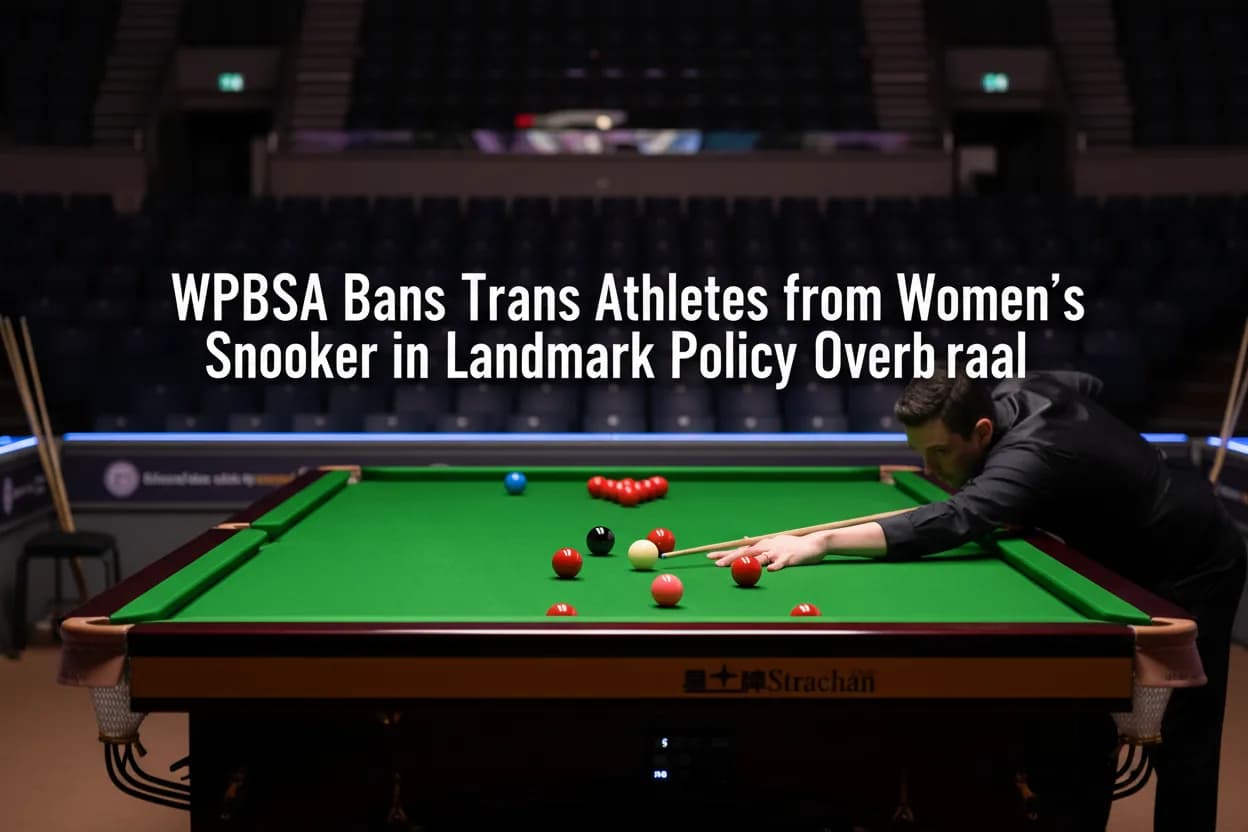
The Governing Body Has Drawn a Clear Line — Here's What It Means for the Women's Game
The WPBSA has published a sweeping new Eligibility Policy that fundamentally reshapes who can compete in women's snooker tournaments. Announced on 26th March 2026, the policy confirms that only biological female players may participate in WPBSA-governed women's events — a significant departure from the previous, more inclusive framework that had been in place. For anyone following the women's game closely, this is the most consequential governance decision in years.
What Changed, and Why Now?
The timing of this policy shift is no accident. The WPBSA explicitly links the review to two seismic legal developments: the Supreme Court Ruling of April 2025 — widely understood to be the landmark For Women Scotland decision that clarified the definition of 'woman' under the Equality Act 2010 — and a subsequent case involving Harriet Haynes and the English Blackball Federation in August 2025. Both cases, and the scientific research submitted as evidence within them, appear to have provided the governing body with the legal and evidential framework it needed to act.
The WPBSA states it took extensive legal advice before reaching its conclusions. Its position has long been that the trans and gender diverse policy would be subject to immediate review should ratified research findings or changes in official guidance emerge. By its own account, those thresholds have now been met. The key legal mechanism the organisation is invoking is Section 195 of the Equality Act 2010, which permits sports governing bodies to restrict participation in gender-affected activities where biology creates a material difference in competitive performance. The WPBSA has now formally classified snooker as a 'gender-affected activity' under that provision.
Open Tournaments Remain Open to All
It is worth being precise about what this policy does — and does not — do. The WPBSA has been clear that open tournaments remain fully accessible to all players, regardless of biological sex, legal sex, or gender identity. Trans and gender diverse players are not being excluded from professional snooker; they are being excluded specifically from women's category events. That distinction matters both legally and practically. The women's tour has grown considerably in recent years, with events such as the World Women's Snooker Championship drawing increasing attention and prize money investment. Protecting the competitive integrity of that category is the stated rationale here.
Context: The Women's Game Is at a Critical Moment
It would be remiss not to acknowledge the broader context. Women's snooker has made genuine strides over the past decade. Players like Reanne Evans, Ng On Yee, and a new generation of emerging talent have worked hard to raise the profile of the women's tour, and the sport is currently in the middle of the World Women's Snooker Championship 2026. Any governance story that overshadows the on-table action is a complication the sport could do without — but equally, governing bodies cannot indefinitely defer difficult eligibility questions when the legal landscape shifts beneath them.
The WPBSA's framing here is careful. The organisation describes itself as "an inclusive organisation" and has gone to some lengths to emphasise that the policy change applies narrowly to women's category competition, not to the sport at large. Whether that framing satisfies all stakeholders is another matter entirely, and it would be naive to suggest this announcement will pass without criticism from some quarters. Trans rights organisations and some within the broader sporting community are likely to push back. The WPBSA will need to communicate its legal reasoning clearly and consistently in the weeks ahead.
What This Means Going Forward
From a pure sporting governance perspective, the WPBSA has now aligned itself with a growing number of sports governing bodies — including World Athletics, British Cycling, and British Swimming — that have moved to restrict women's category competition to biological females following the April 2025 Supreme Court ruling. Snooker, unlike those disciplines, is not typically characterised as a sport where physical attributes such as strength or lung capacity are decisive. The 'gender-affected activity' classification will therefore attract scrutiny, and the governing body should expect to defend that determination robustly.
The full eligibility policy and rules document is now publicly available via the WPBSA. Players, coaches, and tour stakeholders should familiarise themselves with the precise wording — particularly around definitions and the appeals or exemptions process, if any exists. Details on implementation timelines for current and upcoming women's events have not yet been widely publicised, and clarity on that front will be needed quickly given the live tournament calendar.
SnookerWins will continue to follow developments on this story as more detail emerges from the WPBSA.
Please gamble responsibly. Visit BeGambleAware.org or call the National Gambling Helpline on 0808 8020 133.
