Sheffield Puts Disability Snooker in the Spotlight During World Championship Week

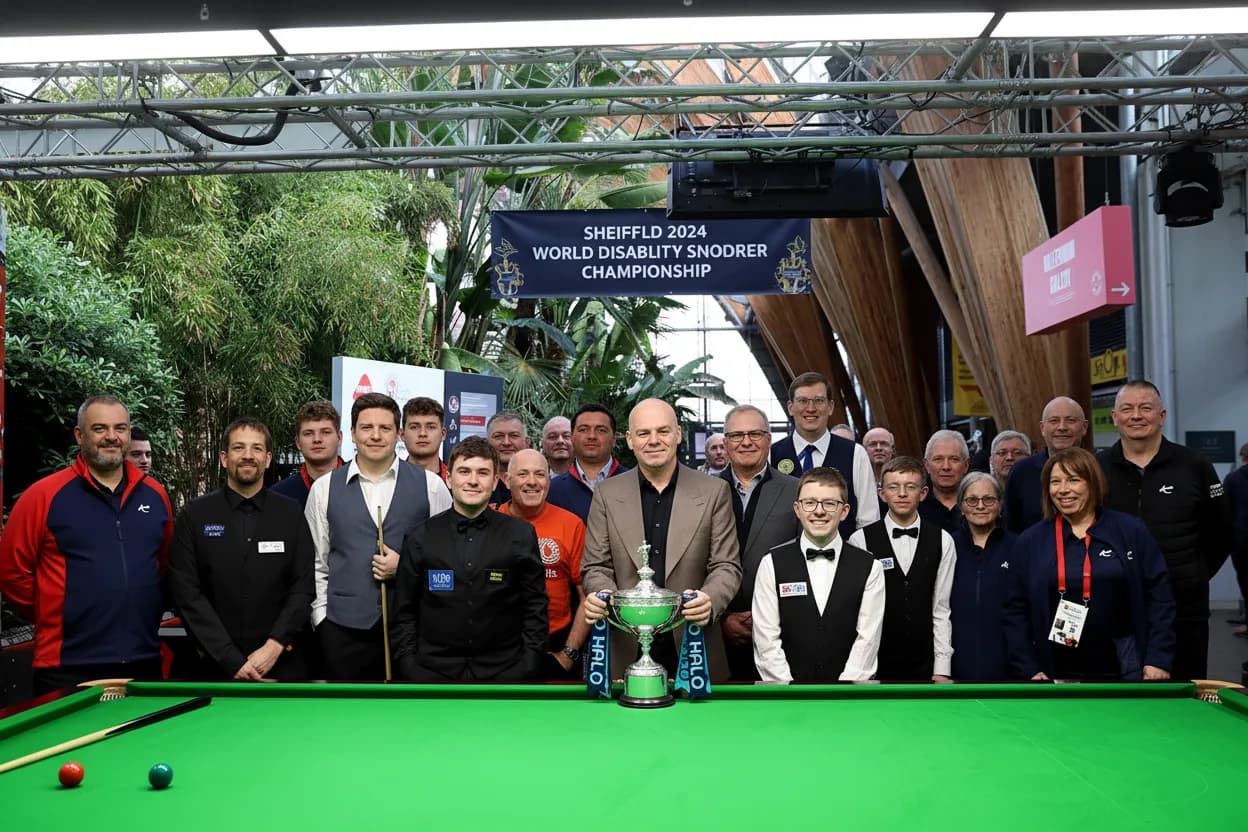
World Disability Snooker Day Returns to the Home of the Game
There's no better stage than Sheffield during World Championship week, and this year's World Disability Snooker Day made full use of it. Held on Wednesday 23rd April as part of the 2026 Halo World Snooker Championship, the annual event brought disability snooker firmly into the mainstream spotlight — with BBC cameras rolling and one of the game's most iconic venues as the backdrop. Now in its 11th year, the World Disability Billiards & Snooker (WDBS) Tour continues to grow at a remarkable pace, and events like this one are central to that momentum.
Who Was Involved — and Why It Mattered
Six WDBS players were invited to take part, and the line-up was genuinely impressive. Group 3 world number one Daniel Kelly headlined the contingent, joined by former European champion Luke Drennan and recently-crowned Belgian Open winner Peter Hull — three names that underline just how high the standard of disability snooker has climbed over the past decade. The Sheffield Winter Garden Cue Zone served as the venue for the afternoon's activities, with WPBSA coaches Mark Peevers, Matthew Haslam and Tiana Dunne-Johnson leading the sessions and demonstrating their craft to both the local crowd and the BBC cameras covering the event.
The afternoon took on an added touch of class when Stuart Bingham, the 2015 World Champion, came along to watch the players in action and pose for photographs with the famous trophy. It's the kind of moment that means everything — a world champion taking time out of the sport's biggest week to show solidarity with players who deserve far greater recognition than they currently receive. Sports broadcaster Catrin Heledd was also on hand to interview Kelly and WDBS Chairman Nigel Mawer QPM, with the pair discussing the global expansion of the WDBS Tour and the organisation's long-term ambition to see snooker reinstated to the Paralympic Games. That interview aired during the BBC's afternoon coverage — prime-time exposure that money simply cannot buy.
A Backstage Crucible Experience to Remember
The event didn't end on Wednesday. On Thursday morning, the players and their guests were treated to a full backstage VIP experience at the Crucible — one of sport's most storied arenas. The group were taken onto the arena floor itself, given a photo opportunity with the World Championship trophy, shown around the media centre, and had the chance to watch Mark Williams go through his paces in the practice room. For players who dedicate themselves to this sport day in and day out, often without the fanfare their talent deserves, it was a genuinely special occasion.
The Bigger Picture — Snooker and the Paralympic Dream
The WDBS Tour's 11-year journey is one of snooker's lesser-told success stories. What began as a modest initiative to give disabled players competitive opportunities has evolved into a structured, international tour spanning multiple continents, with events from Belgium to the British Isles and ambitions that stretch well beyond that. The organisation's goal of returning snooker to the Paralympic Games is not idle talk — it's a structured campaign backed by growing participation numbers, improving broadcast coverage, and the kind of institutional support that comes from being embedded within the WPBSA ecosystem.
Snooker last featured at the Paralympics in Seoul in 1988, and while the road back is long, the WDBS is making all the right moves. Events like World Disability Snooker Day — staged deliberately during the sport's most-watched week of the year — are part of a calculated effort to raise awareness among the broadest possible audience. When BBC viewers tuning in for first-round Crucible action also catch a segment on Kelly, Drennan and Hull showing what disability snooker looks like at its best, that's a win that extends far beyond the table.
A Growing Tour Worth Following
If you haven't been paying attention to the WDBS Tour, now is the time to start. The recent Belgian Open, won by Peter Hull, is just the latest in a busy calendar of competitive events. With European championships producing their own champions and the forthcoming World Abilitysport Guttmann Games set to feature snooker in 2026, the profile of the game's disability circuit is rising faster than at any point in its history. The WDBS deserves credit — and more eyeballs — for what it has built.
World Disability Snooker Day 2026 was, by all accounts, another success. Credit to everyone at the WDBS, the WPBSA coaching team, Stuart Bingham for giving his time, and the BBC for making sure the story reached the audience it deserved.
