Snooker star's match-fixing ban upheld
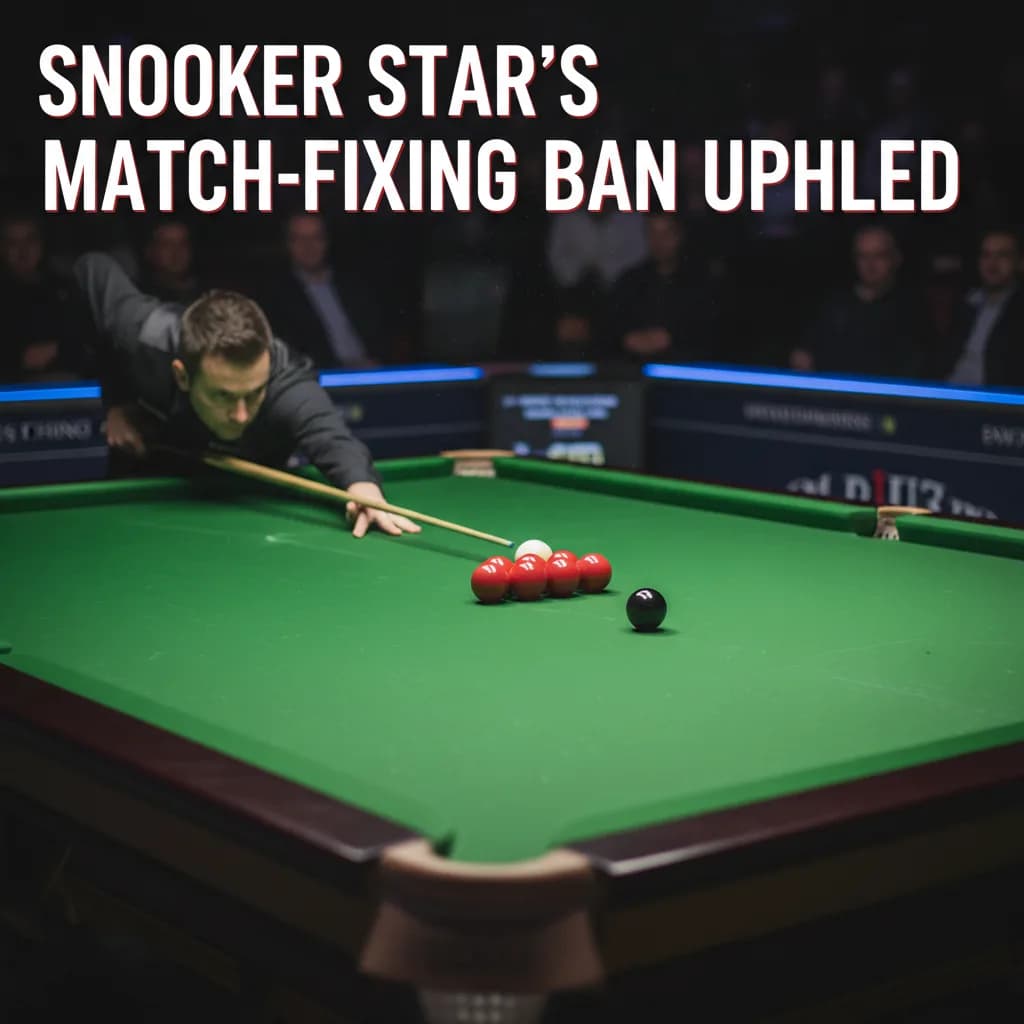
LONDON — Former Northern Ireland Open champion Mark King has lost his appeal against a five-year ban from professional snooker after being found guilty of match-fixing. The World Professional Billiards and Snooker Association (WPBSA) upheld the suspension, marking one of the sport’s most severe sanctions in recent years.
King, 49, was initially banned in September 2023 following an investigation into suspicious betting patterns surrounding his match against Joe Perry at the 2022 Welsh Open. The WPBSA’s disciplinary committee ruled that King had deliberately lost frames in exchange for financial gain, violating the sport’s integrity rules. The appeal, heard by an independent tribunal, concluded this week with the original penalty confirmed.
The Investigation and Findings
The WPBSA’s anti-corruption unit launched an inquiry after irregular betting activity was flagged during King’s 4-0 defeat to Perry. Key findings included:
- Unusual wagers placed on specific frame scores, including a high volume of bets predicting Perry to win 4-0.
- Evidence of King communicating with known betting associates before the match.
- Statistical anomalies in King’s performance, with uncharacteristic errors in critical moments.
WPBSA chairman Jason Ferguson stated, "The evidence presented was clear and compelling. Match-fixing undermines the very foundation of our sport, and we will not tolerate it." King, who turned professional in 1991 and won his sole ranking title in 2016, has consistently denied the allegations.
King’s Defense and Appeal
During the appeal, King’s legal team argued that the disciplinary process was flawed, citing insufficient proof of intentional wrongdoing. They claimed:
- The betting patterns could be attributed to coincidence.
- King’s poor form at the time explained his performance.
- No direct financial trail linked him to the suspicious wagers.
However, the tribunal dismissed these arguments, noting "overwhelming circumstantial evidence" of manipulation. The panel also highlighted King’s previous involvement in a 2018 case where he was fined for failing to report a match-fixing approach, though he was cleared of direct corruption at the time.
Reactions from the Snooker Community
The decision has sparked mixed reactions. Seven-time world champion Stephen Hendry called the ban "a necessary deterrent," while Perry, King’s opponent in the disputed match, expressed sympathy: "It’s a sad day for snooker. Mark was a great competitor, but integrity must come first."
Other players, including world No. 1 Ronnie O’Sullivan, have called for stricter measures. O’Sullivan told Eurosport: "The sport needs to send a message. If you’re caught fixing, you’re gone for life. No second chances." The WPBSA has not ruled out lifetime bans for future offenses but emphasized that King’s penalty reflects the severity of his actions.
Broader Implications for Snooker
The case is the latest in a series of integrity scandals to hit snooker. In 2022, 10 Chinese players, including former UK Championship winner Liang Wenbo, were suspended for match-fixing. Ferguson acknowledged the sport’s vulnerability: "We’re investing heavily in monitoring and education to protect the game’s future."
Key steps being taken include:
- Expanded partnerships with betting regulators to detect irregularities faster.
- Mandatory integrity workshops for all tour players.
- Stricter penalties, including potential criminal referrals for severe cases.
Conclusion: A Cautionary Tale
King’s ban, which runs until 2028, effectively ends his 32-year career. Once ranked as high as No. 11 globally, he now faces a lifetime exclusion from WPBSA-sanctioned events. The case serves as a stark reminder of snooker’s zero-tolerance stance. As Ferguson concluded: "Trust is everything in sport. Once it’s broken, the damage is irreparable."